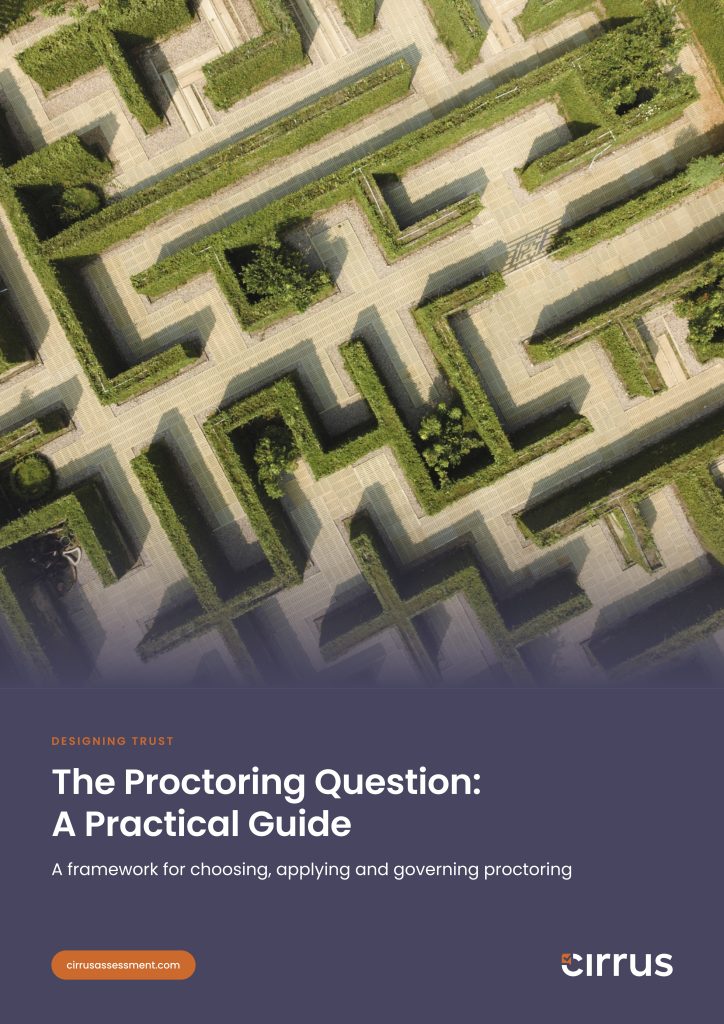
The Proctoring Question series ends with a practical guide that brings the ideas from all eight articles together in one place.
Over eight articles, The Proctoring Question has covered fairness across delivery channels, reviewer workload, security, choosing a proctoring model, candidate experience, access and equity, governance, and where proctoring goes from here.
One idea ran through all of them. The right proctoring approach is not the one that creates the most surveillance. It is the one that provides sufficient assurance in the assessment outcome while respecting candidate rights, needs and circumstances.
This guide turns that idea into something you can use.
What’s inside
Ten principles worth keeping. These run from starting with the assessment risk rather than the technology, to checking that controls stay proportionate over time. Each one comes with a short note on what it means in practice.
The Three Matches. This is a tool for choosing a proctoring model. Match the level of control to the level of risk, the delivery model to the candidate and assessment context, and the technology to your organisation’s ability to run it responsibly. It ends with one test: can you explain, in plain language, why the model is necessary, proportionate and fair?
Five governance questions before using AI in proctoring. Answer these before AI plays any part in proctoring decisions. They cover what the system can and cannot reliably identify, where human judgement comes in, and how a candidate can question or appeal a decision the system has influenced.
Use it when you are choosing a proctoring approach, reviewing one you already have, or deciding whether AI should play a part.
Download The Proctoring Question: A Practical Guide >>
The full series
The Proctoring Question began with Designing Trust: The Next Chapter of Remote Proctoring.
- Fairness across delivery channels
- Reviewer workload and flag fatigue
- How Secure Is Secure Enough?
- Choosing the right proctoring model
- The Candidate Experience Is Part of Assessment Quality
- Access and Equity Are Not the Same
- Who Decides What a Flag Means?
- The Future of Proctoring
Rethinking how you use proctoring? Get an independent view of what’s working in your assessment approach, and what’s under pressure: Book your free Assessment Process Check